China travel series
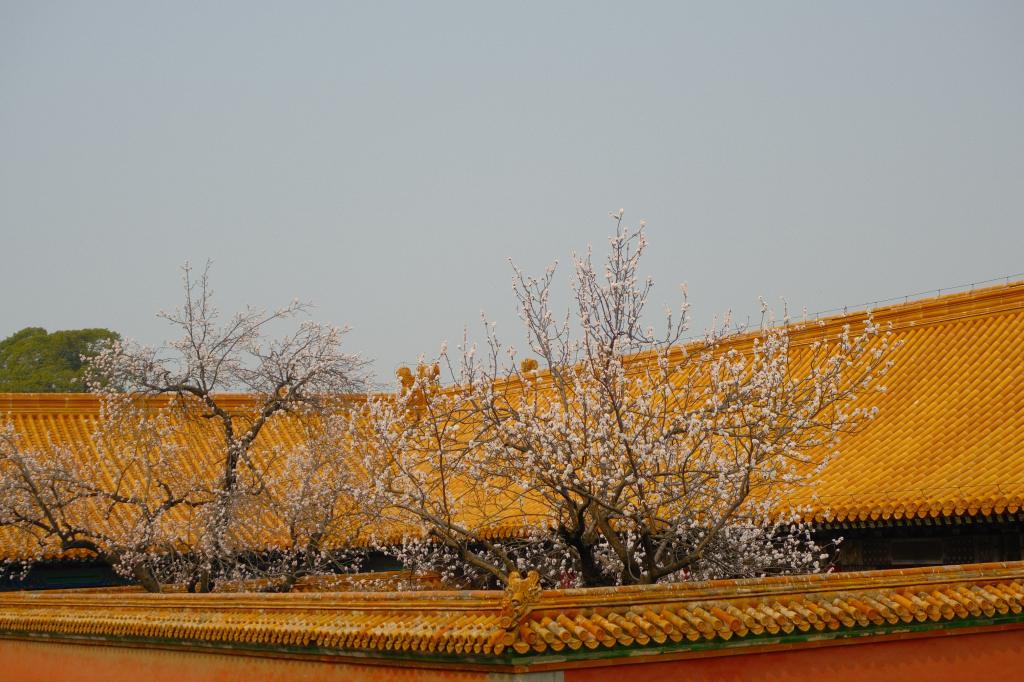
Cultural Insights from My Beijing Journey
LEARNING TO SLOW DOWN IN A CONTROLLED WORLD
Overview
I spent three nights in Beijing, and in many ways, it felt like an adjustment phase, not just to a new country, but to a completely different system of living.
There is structure, control, and order everywhere. And yet, within that, there is life, movement, and a deep connection to history that is being actively preserved.
Beijing didn’t open up to me immediately. It took time. But when it did, it stayed.
⸻
Day 1: Hesitation, Hunger, and First Impressions
My first day began with a sense of hesitation.
China’s internet firewall is not just a concept—you feel it the moment you land. My eSIM with VPN wasn’t working properly, and suddenly something as simple as navigating a city or calling a cab became uncertain.
So I did what I usually resist doing—I slowed down.
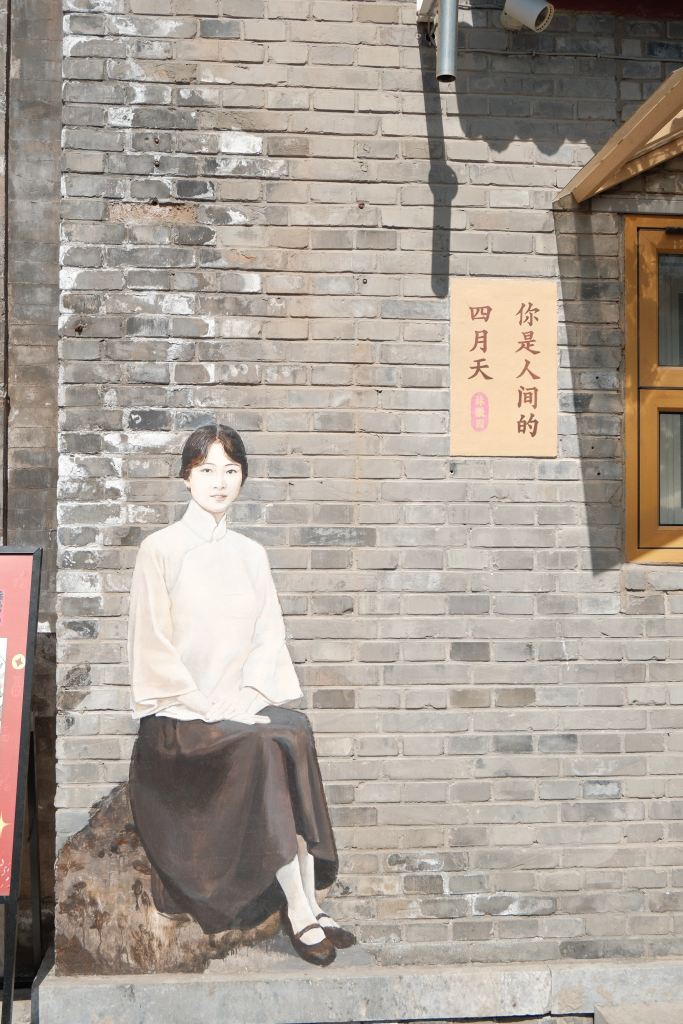
I walked through Nanluoguxiang Hutong, letting the city come to me instead of chasing it. Small lanes, local shops, glimpses of everyday life—it felt like a softer entry into a place that otherwise felt overwhelming.
This is where I had my first Peking duck.
And like always, I repeated a pattern I know too well. I kept postponing food, thinking I’d find something better ahead. By the time I finally sat down, I was too hungry to explore properly. I chose a place slightly above what I would usually spend—but the meal was excellent. Sometimes, instinct works better than planning.
Later, I visited Yonghe Temple, and this is where something shifted.
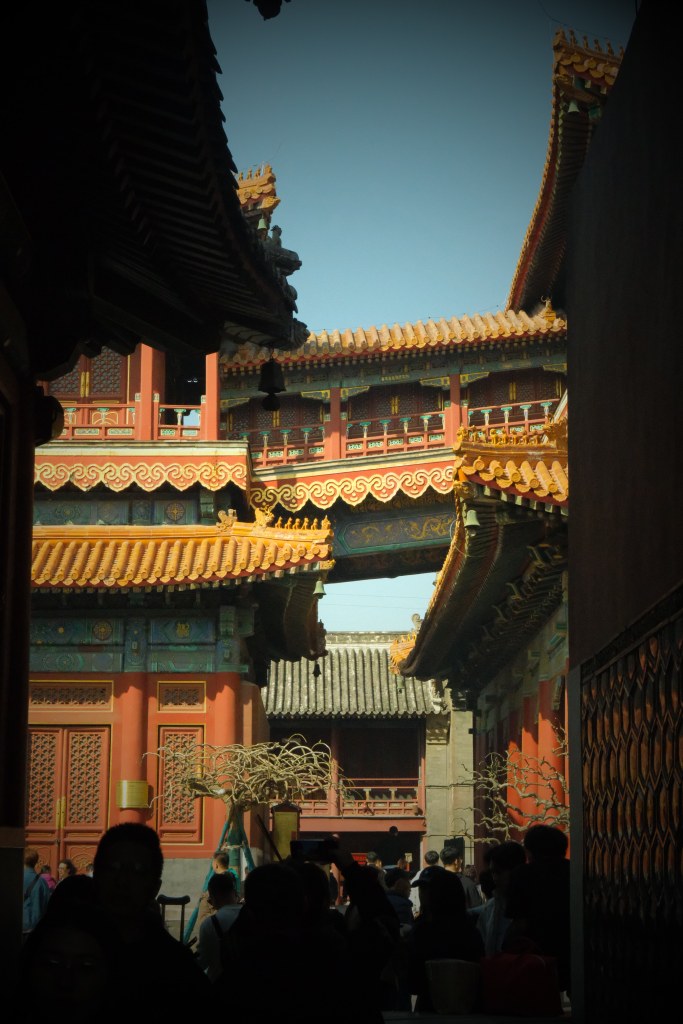
The space was filled with incense, but it wasn’t overwhelming. It was grounding. The architecture was beautiful, but what stayed with me were the details—the Buddha figures, some of them made using layered fabric, creating texture and depth. It felt artistic in a very different way, almost tactile.
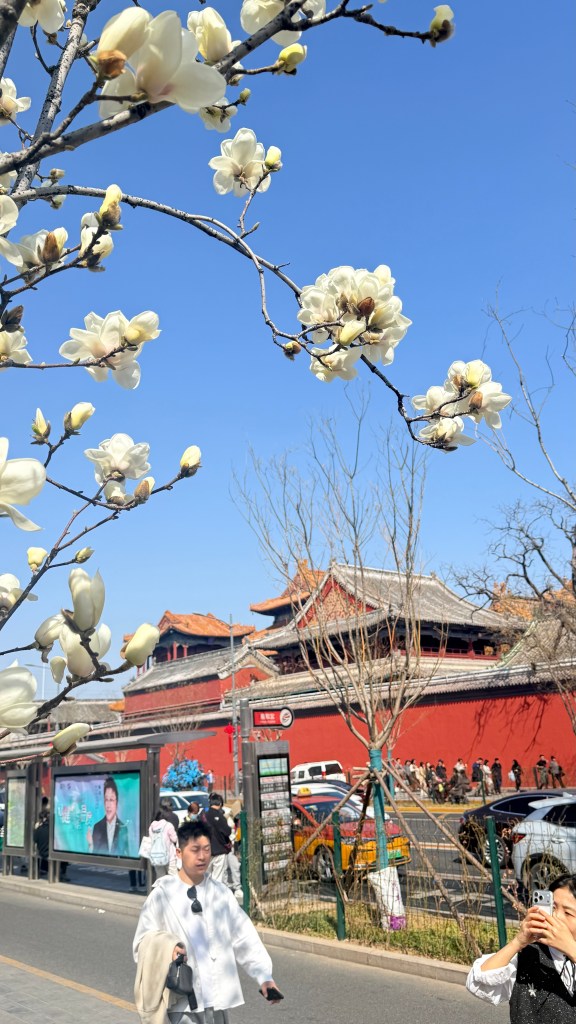
What surprised me was that despite the crowd, it didn’t feel suffocating. There was movement, but also calm.
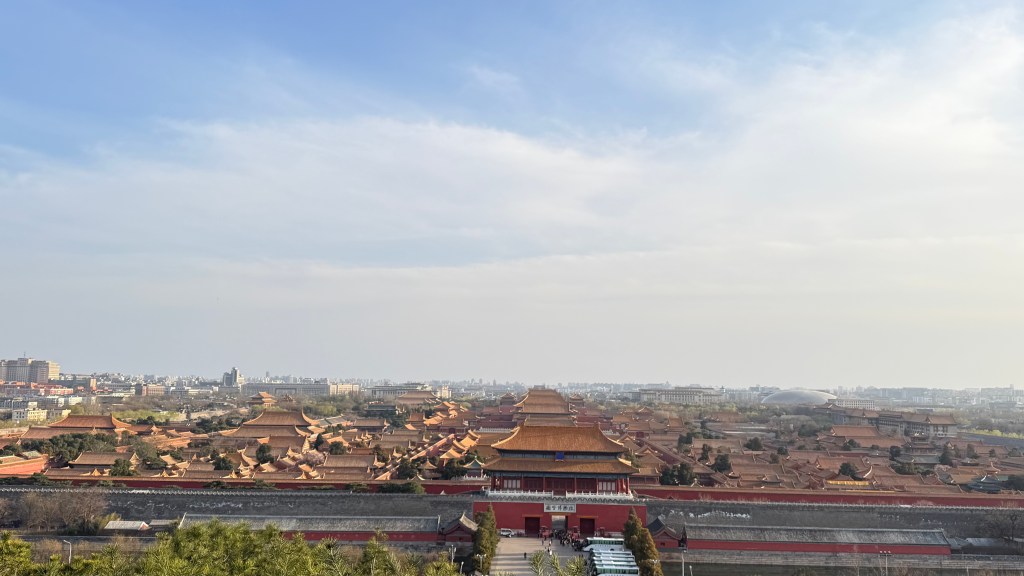
In the evening, I climbed up Jingshan Park to see the Forbidden City from above.
It was chaotic. Crowded. You barely get space to stand.
But then you reach the railing, even if just for a few seconds, and everything aligns—the light, the scale, the silence inside you. The Forbidden City stretched endlessly in front of me, glowing under the setting sun. And for a brief moment, the chaos disappeared.
Getting back to the hotel brought me back to reality. My eSIM stopped working again, and booking a DiDi became a frustrating exercise in patience.
I ended the day tired, slightly overwhelmed—but also curious.
⸻
Day 2: When Plans Fail, the City Reveals Itself
I had planned to visit the Temple of Heaven, but it was closed—it was a Monday.
And unexpectedly, that became one of the best parts of the trip.
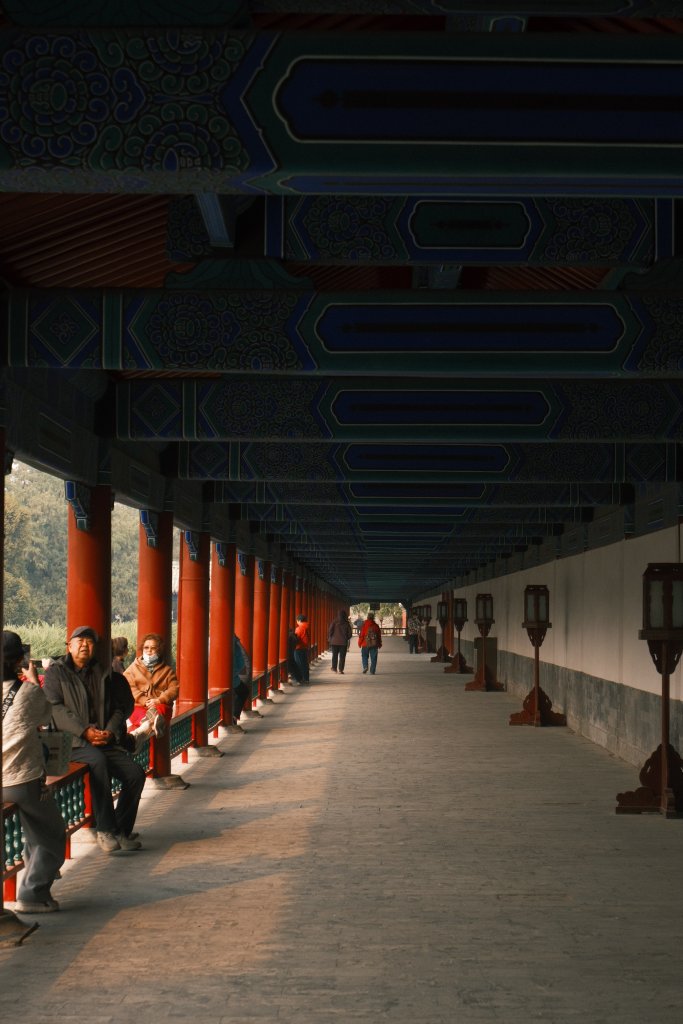
Instead of rushing elsewhere, I stayed in the park around it.
What I witnessed there felt more valuable than any monument. Older locals, fully present in their routines—tai chi, dancing, stretching, singing. Some were serious, deeply focused. Others were laughing, moving to music, enjoying the morning.
There was individuality within community.
It made me realise something simple but powerful—public spaces in China are lived in, not just passed through.
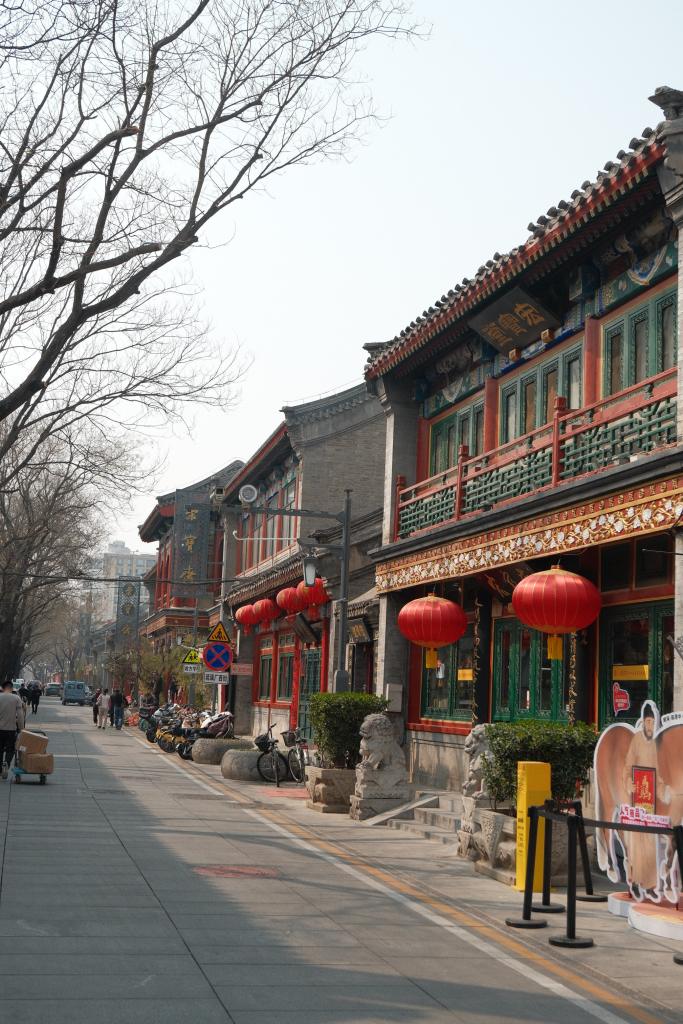
From there, I went to Dashilar, which completely surprised me.
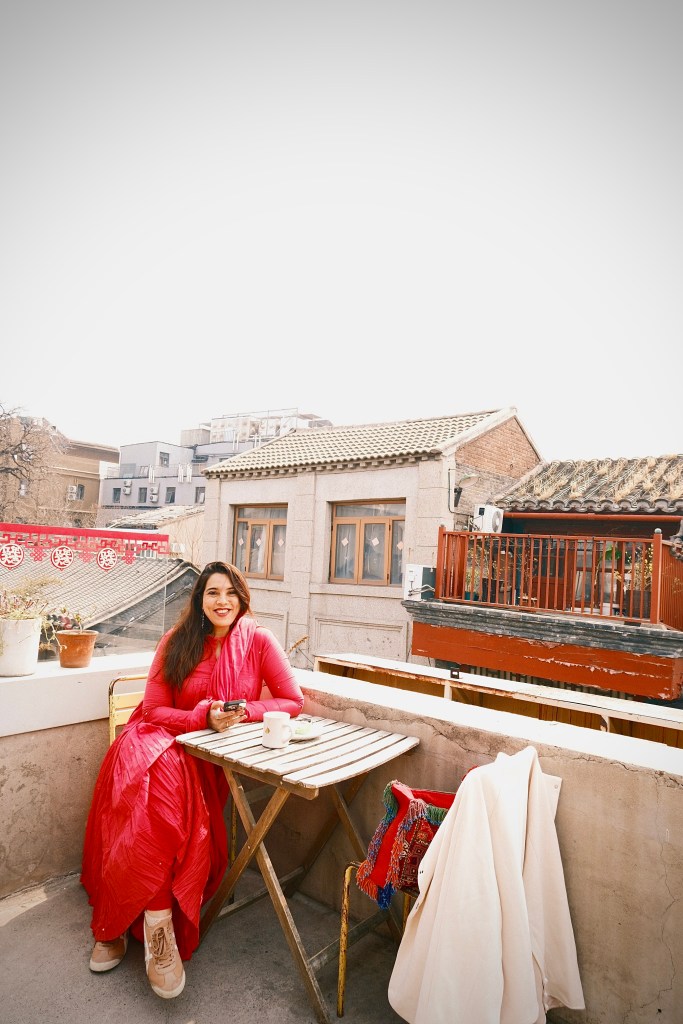
I stopped at Soloist Coffee Co., and if there is one place I would recommend without hesitation, it’s this. Sitting on the rooftop in the morning, watching the street slowly come alive—it felt like stepping into another time.
Right across, I found a souvenir store that didn’t feel touristy. Thoughtful objects, well-designed postcards, things that felt like they belonged to the place.
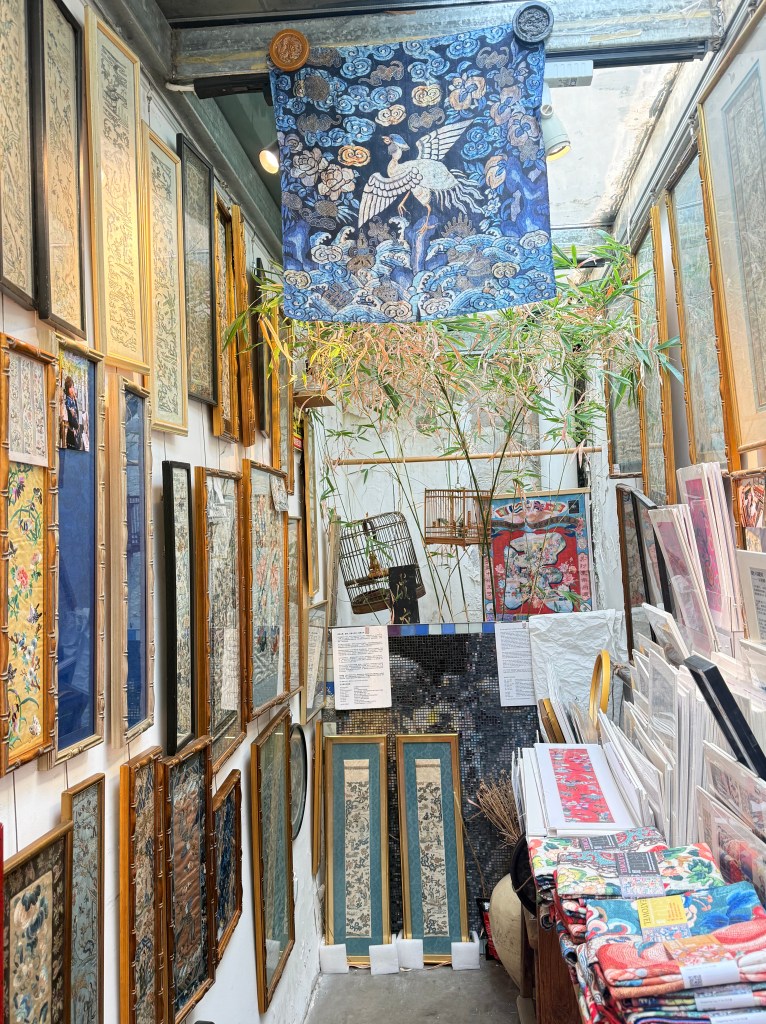
As I walked further, the entire area started to feel like a different era—not ancient China, but something closer to the 1930s or 40s.
Later, I made my way to the Summer Palace.
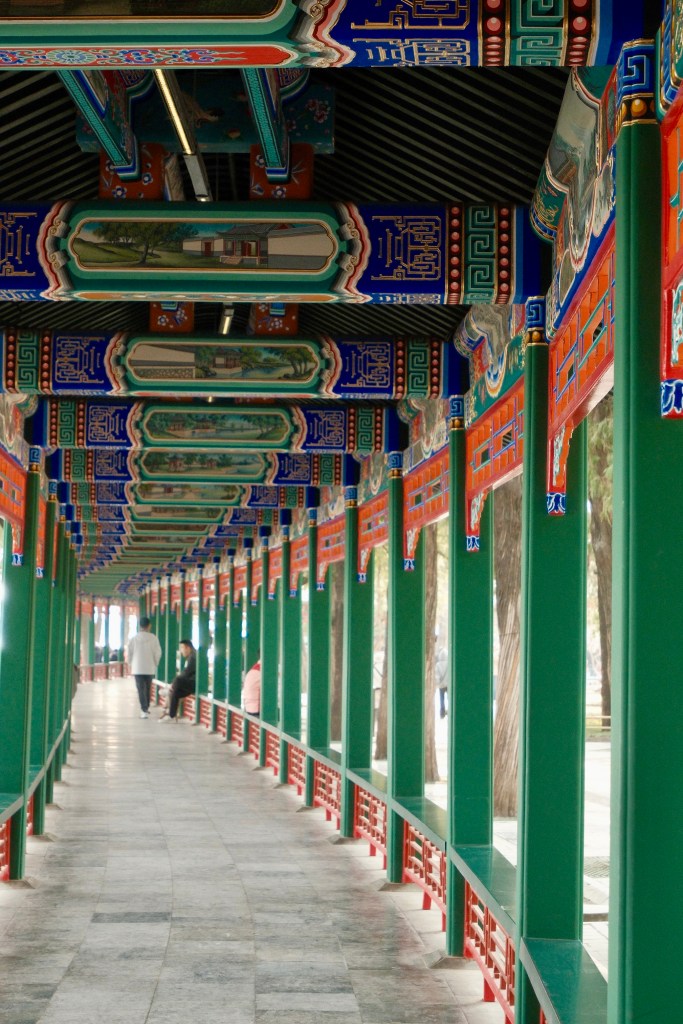
And this is where another realisation hit me.
Yes, it was crowded—overwhelmingly so at times. But there was something else beneath that.
The Chinese travel. They travel in large groups, within their own country, exploring their own history, their own culture. And in doing so, they are constantly supporting their local economy.
It made me think of how powerful that is—how tourism doesn’t always have to be outward-looking. It can be deeply internal, deeply rooted.
It wasn’t easy to find quiet moments there. But when I did—near the lake, under blooming magnolia trees, in the soft light of the evening—it felt worth the effort.
⸻
Day 3: History, Scale, and a Quiet Overwhelm
My third day was structured. I had booked a tour through GetYourGuide.
I was picked up early by my guide, Murphy, and joined a group of travellers from across the world—England, Mexico, USA, Brazil, Uruguay, Italy. It was one of those rare groups where everyone just got along.
We started at Tiananmen Square.
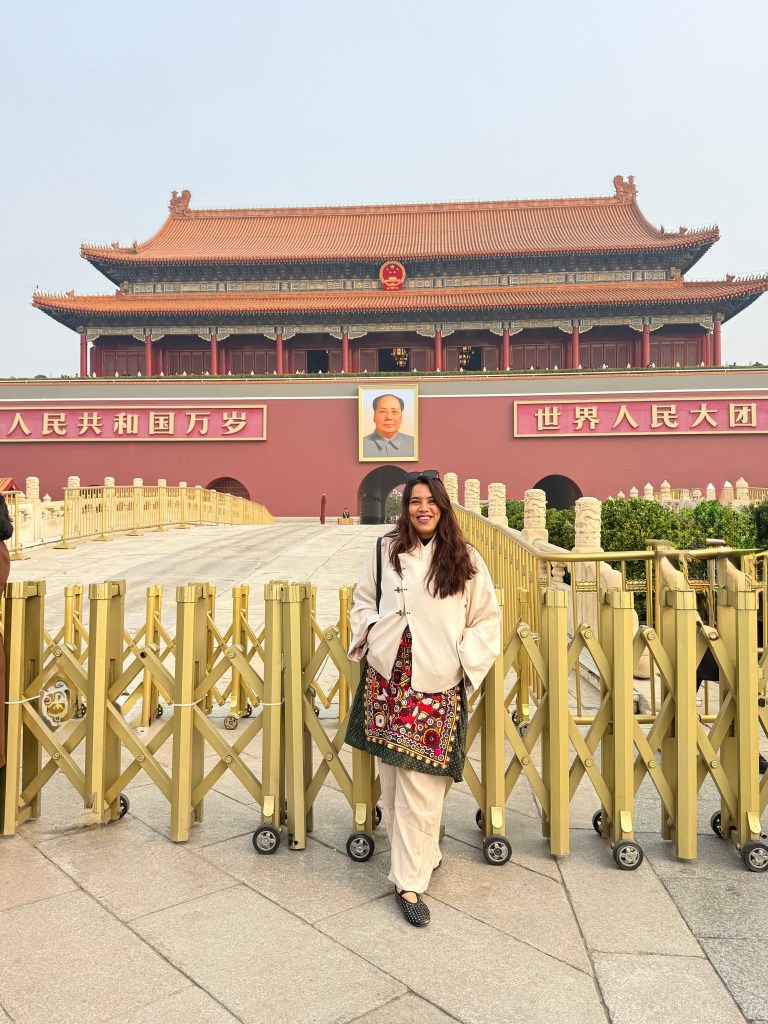
The first thing that stood out was the level of security. Multiple checkpoints, passport scans, detailed screening—not superficial, but thorough and technology-driven. It felt intense, but also efficient.
From there, we entered the Forbidden City.
It is vast. And yet, it doesn’t try to overwhelm you with grandeur in an obvious way. It is muted, controlled, but undeniably spectacular.
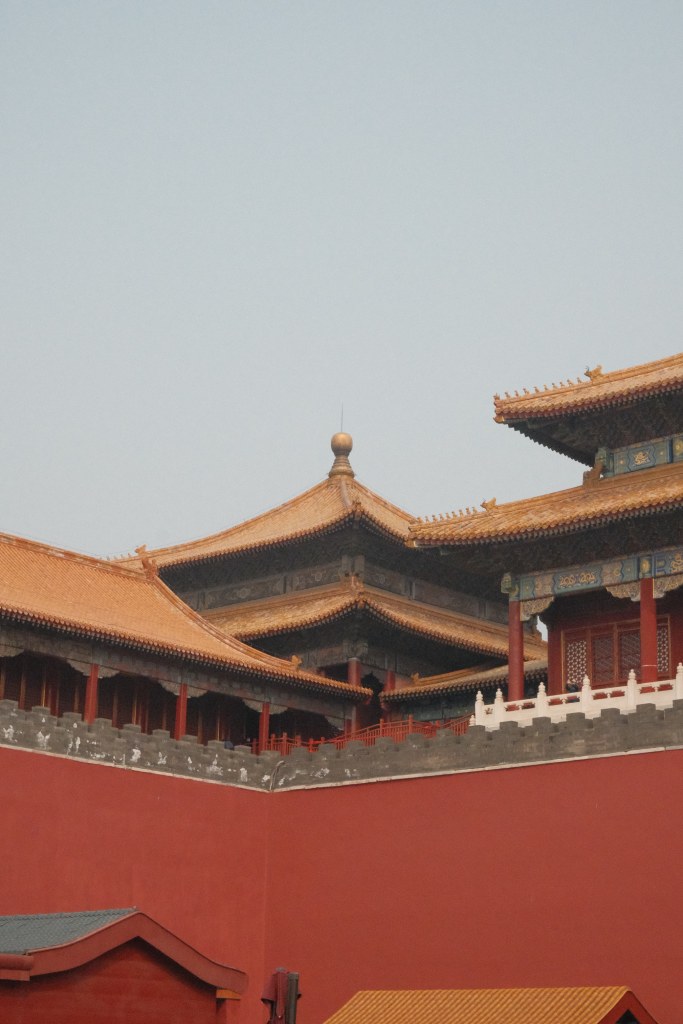
What stayed with me wasn’t just the architecture—it was the people. Visitors from all over China, some in traditional attire, coming to see their history.
And then, the deeper realisation—this place has been destroyed and rebuilt multiple times. And today, it is being restored using traditional methods, by skilled artisans trained in those techniques.
That level of commitment to preserving the past—it stayed with me.
I didn’t get to explore it fully. And I know I’ll come back someday, just to spend time there without rushing.
Later, we drove to the Mutianyu Great Wall.
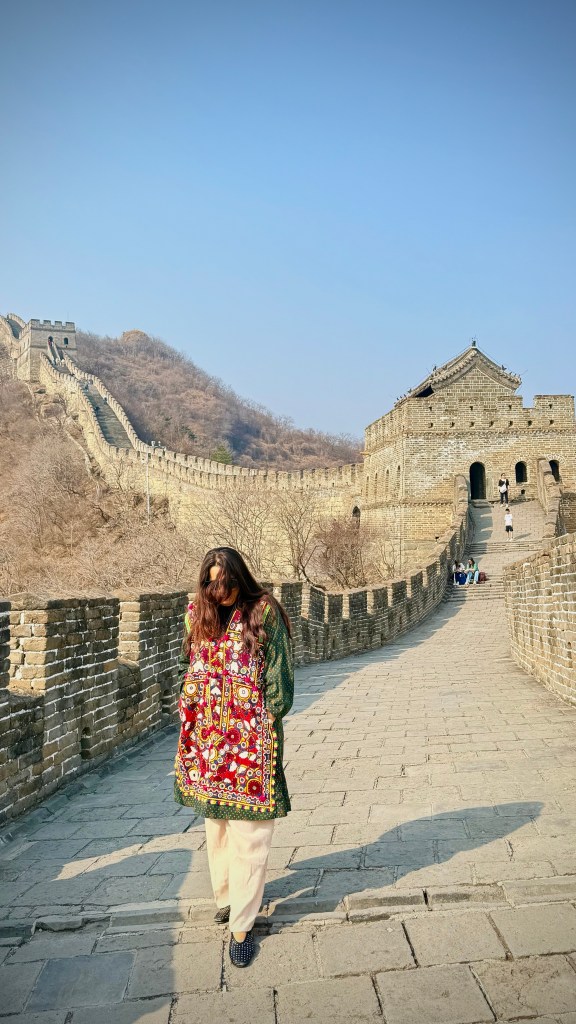
Most people go to Badaling, which is extremely crowded. This section felt like a gift.
We took a cable car up, and for moments, there was no one around. Just the Wall, stretching across mountains, quiet and endless.
I had seen it in books, in paintings, in films. But standing there, on it, something shifted.
My mind went completely blank.
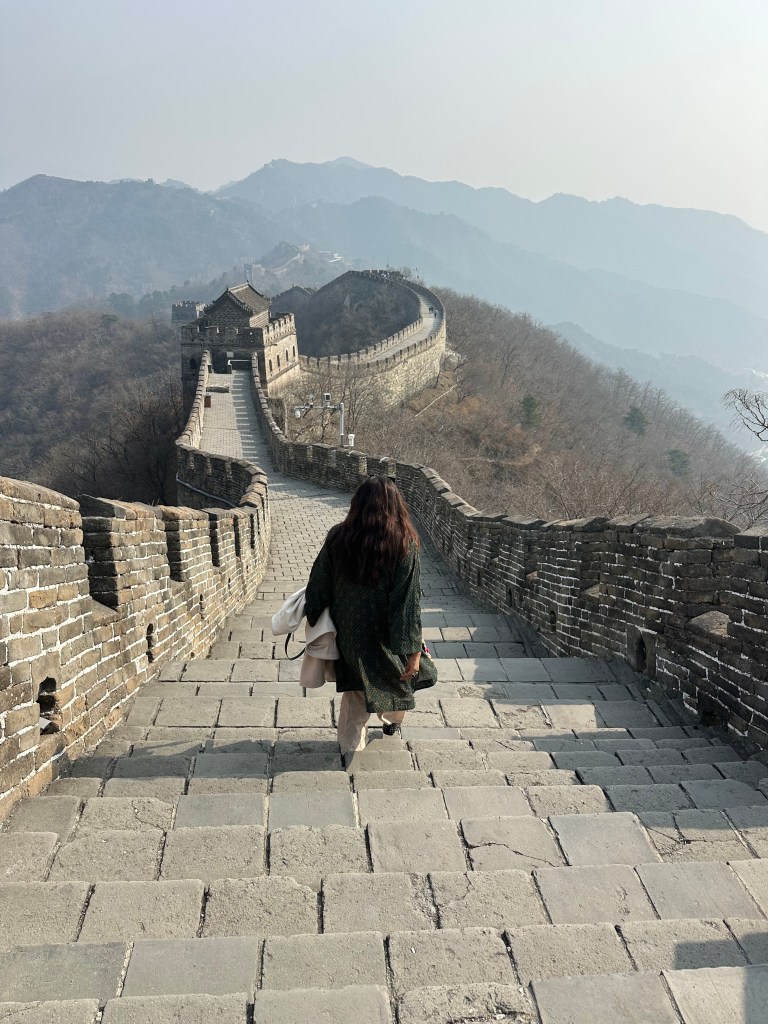
There was no thought, no analysis—just a deep, quiet calm. Almost like a sense of having reached something I didn’t know I was seeking.
Coming down by the toboggan ride was almost ironic—fast, playful, modern—after standing on something so ancient.
I came back exhausted, but full.
⸻
Day 4: A Missed Plan, A Small Lesson
The next morning, I finally visited the Temple of Heaven.
I went early, hoping to beat the crowds. That was optimistic.
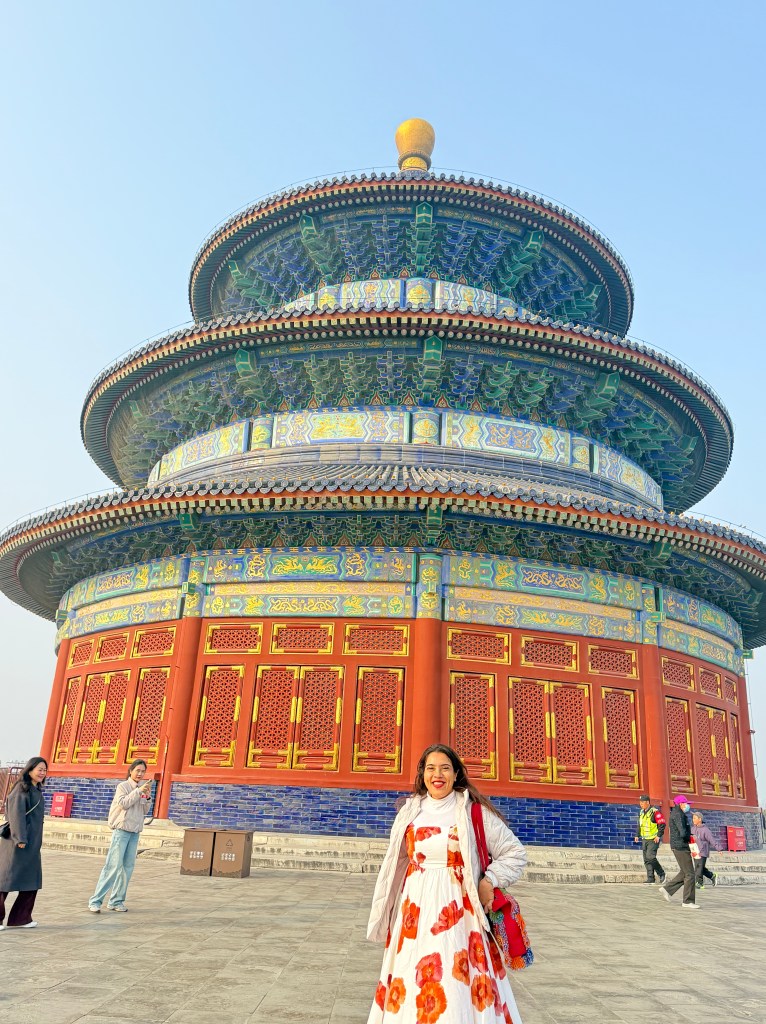
It was still busy—but beautiful. Symmetrical, precise, almost meditative in its design.
After that, I returned to the hotel, had breakfast, and left for the train.
And then, a very real travel moment—I went to the wrong station.
I assumed there was one main station. There wasn’t. By the time I reached the correct one, I had missed my train.
I had to book another ticket.
But even in that, I noticed something impressive—the system.
In China, your passport is your ticket. You scan it, and everything is there—your train, your details. The stations are massive, clean, efficient. The process is fast, organised, and seamless.
After a few hours on a high-speed train, I reached Xi’an.
What Stayed With Me
• Beijing requires patience—it doesn’t open up instantly
• Slowing down changed my entire experience
• The Chinese travelling within their own country is powerful—it sustains their economy and culture
• Preservation here is intentional, not accidental
• Crowds are constant—but so are moments of stillness, if you look for them


Leave a comment