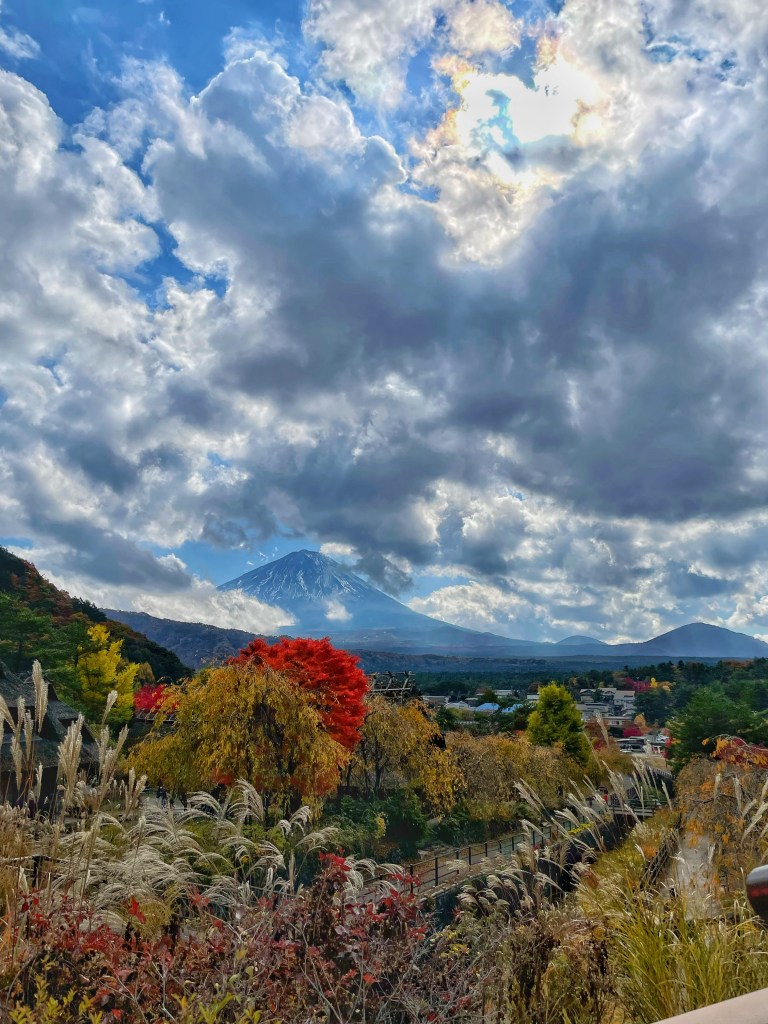
When I made the decision to learn Japanese and come to Japan on a student visa at the age of 38, many people, even the Japanese I met in Japan, asked me, “why?” At that time, my immediate answer was, visiting Japan has always been my dream. Japan is one of the very few countries that I wanted to see inside out, and just a few weeks of travel would not satiate my thirst to explore this country. I am not a person who enjoys museums, temples, or monuments as much. Don’t get me wrong. I do love seeing stunning architecture, but I am not one of those who will sit, research, and spend hours at such places. I will go there, look at it, marvel at its beauty, and I will be done.
Give me nature, give me the beautiful creation that nature has created and I’m happy exploring. For me,1 year student Visa was the best bet to come to Japan and see all the four seasons of Japan. Japan dons a new personality in every season. Every season has its own beauty, charm and your emotions and feelings turn and change during each season too.
I arrived in Japan on October 1, to be exact. I landed in the city of Nagoya where my language school is. Nagoya falls at this sweet spot in Japan. It is the center from where you can just travel everywhere north or south. School during the week and traveling during the weekends – that has been my plan, and I have tried to stick to it as much as possible.
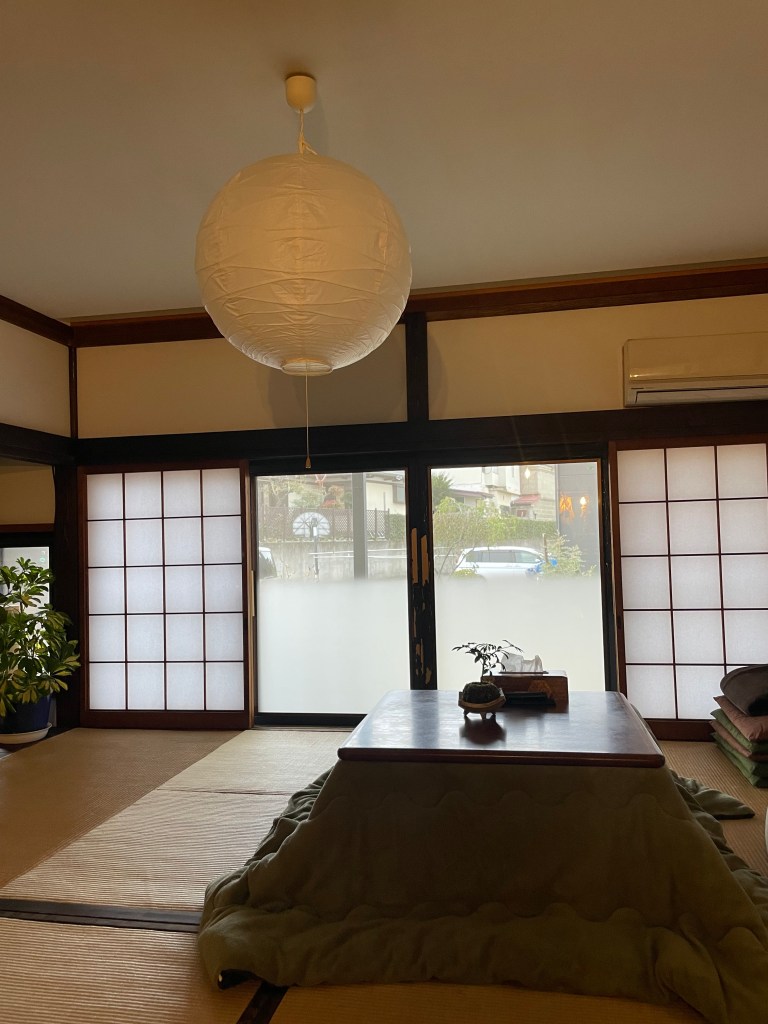
On one of my first long weekends, I traveled on a late-night bus to a youth hostel. I was very tired after the morning classes and a 5-hour bus ride from Nagoya to another city in Japan. I checked in and fell asleep right away. This was one of my longest journeys in Japan.
The next morning I got up and went to the nearest bus stop to start my wandering. As I neared the bus stop, I stopped in my tracks, taking one slow step forward at a time, making sure if I was really awake. Lake Kawaguchiko lay in front of me in all its autumnal glory.
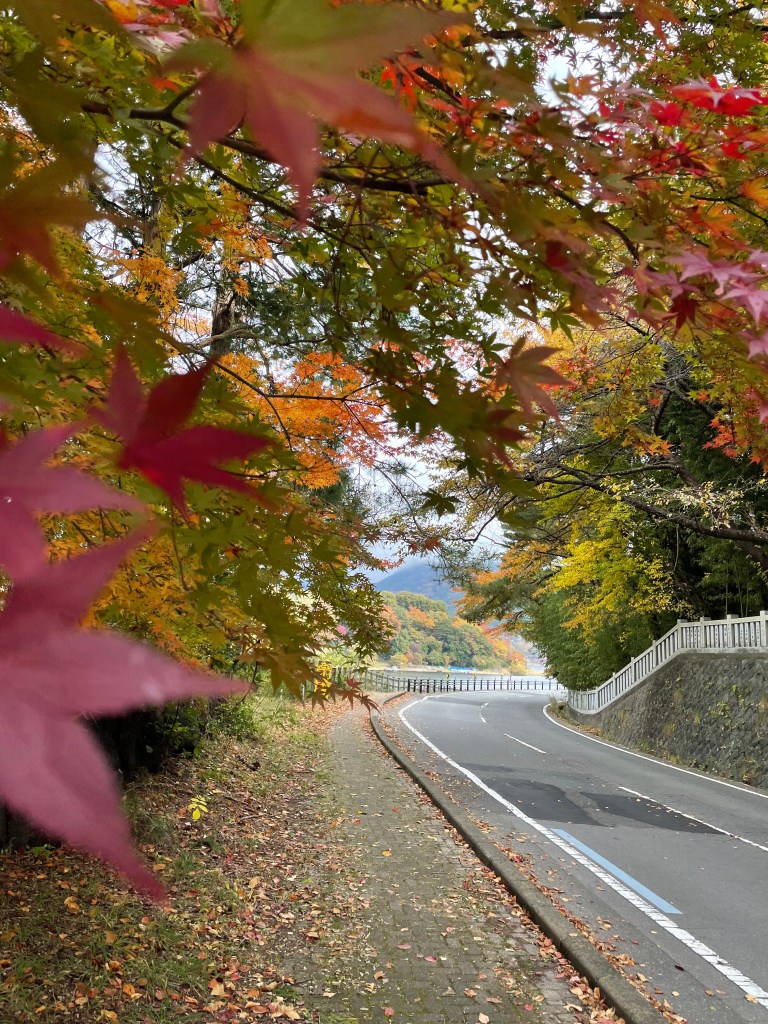
I just sat on the stairs there and watched the marvel that was unfolding in front of me. A beautiful lake dotted with islands, small fishing boats bobbing calmly, doing their morning fishing, surrounded by hills, covered with the most stunning shades of reds, yellows, and oranges. These fiery red hills reflected perfectly in the water. You could hear a soft tolling of a bell from a nearby shrine, hardly any car passing on the road behind me, and before I knew it, tears were literally rolling down my cheeks. So, that is true beauty does to you, I thought to myself. It churns, and takes your emotions on a wild roller coaster ride.
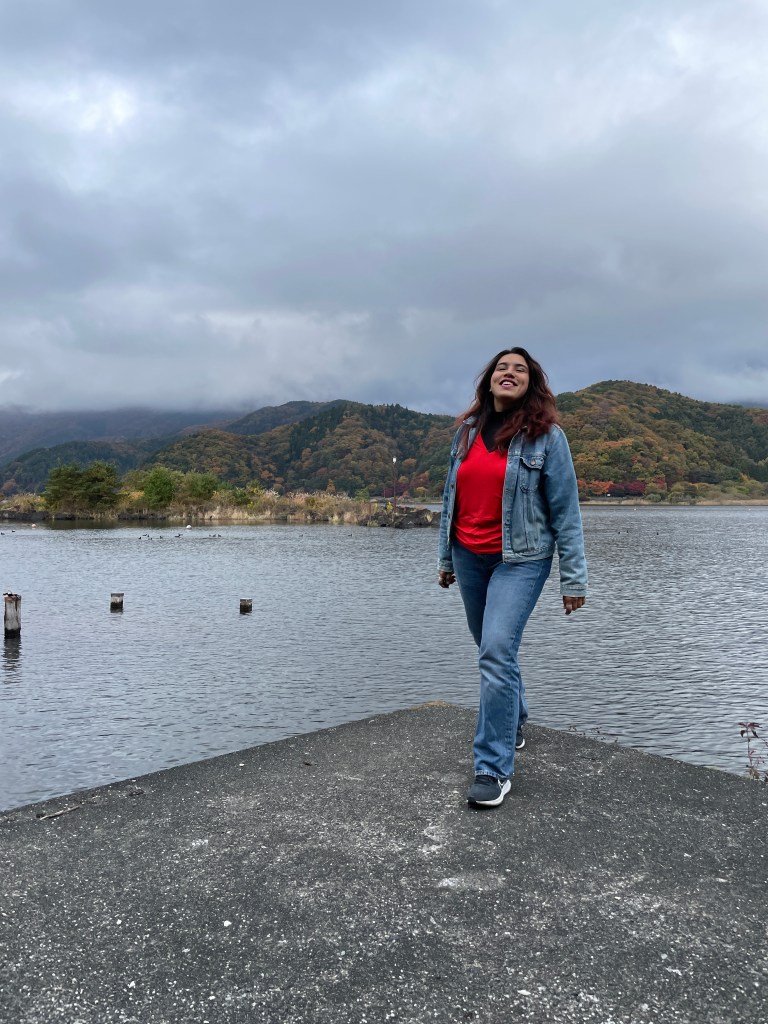
Lake Kawaguchiko area is known for the stunning views you get of Mount Fuji. But from where I was sitting there was no Mount Fuji, just this calm morning scene on a beautiful clear autumn day.

I have been to many places around Japan during the Autumn season, but this moment, right there, beside Lake Kawaguchiko has been my most treasured.
Japan has many must-see places during every season. I could not make it to most of them, but wherever I went, it took my breath away.
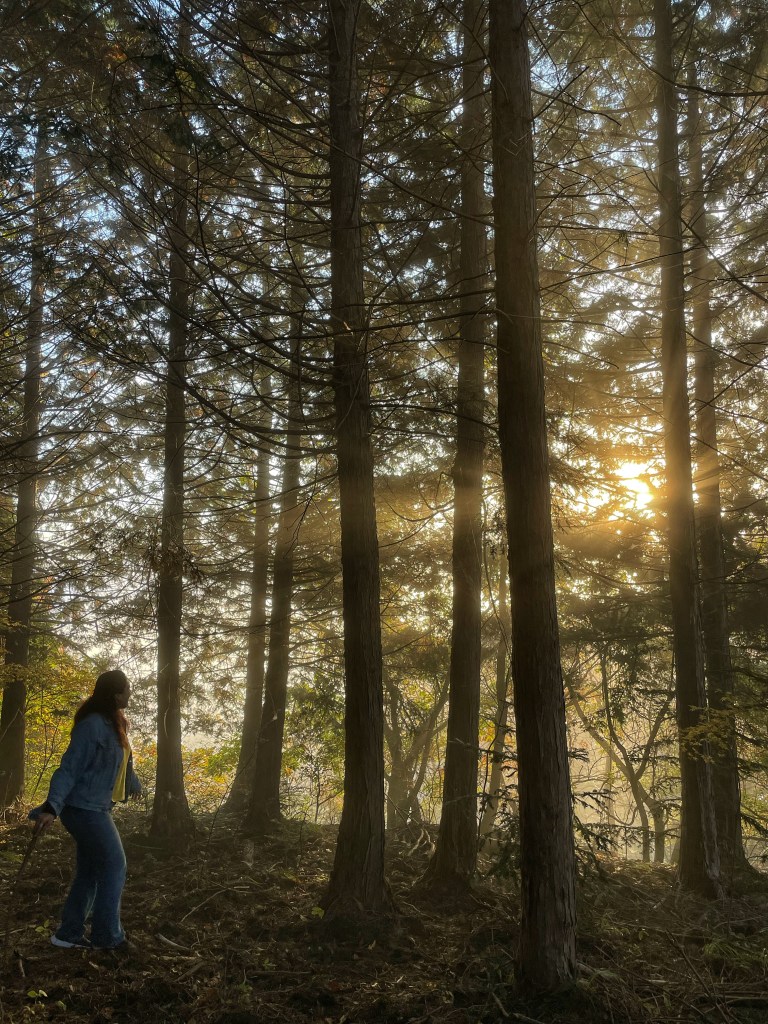
There is this word in Japanese language, 紅葉狩り – Momijigari. The two kanji 紅葉 have a double reading: こうよう /kouyou/ and もみじ /momiji/.
Kouyou is the word for the leaves turning to autumn colours.

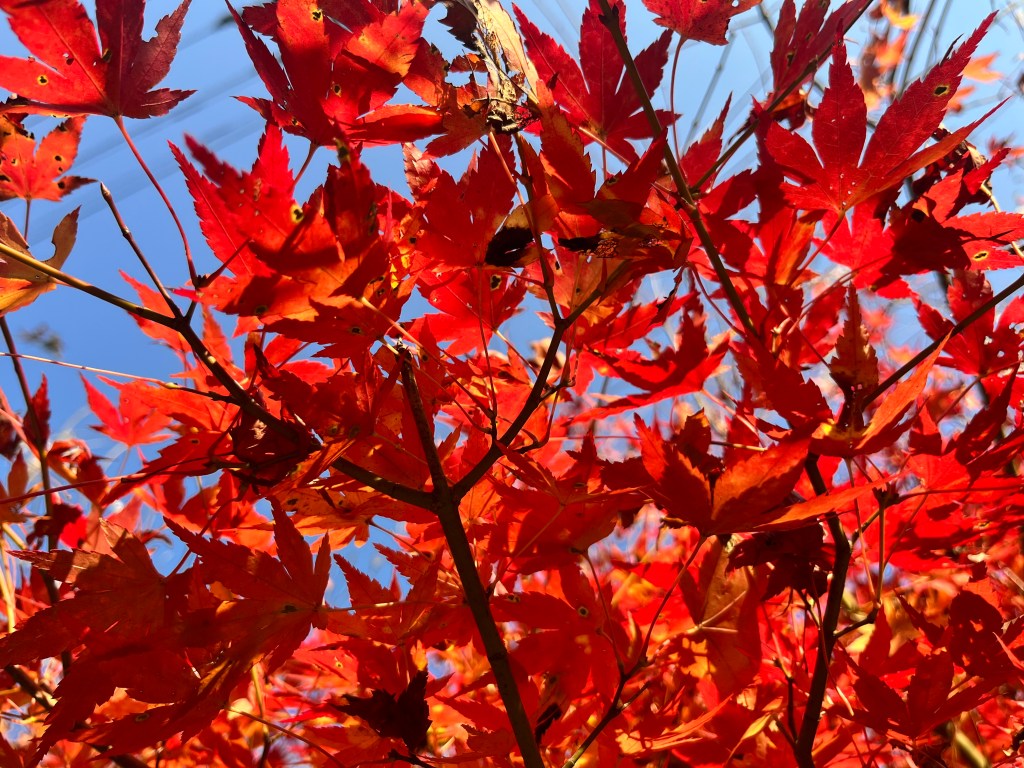
Momiji is the Japanese maple, one of the most beautiful trees during the autumn, with its leaves turning slowly from a fresh green to a bright yellow, a warm orange and finally an intense red. Momijigari, literally means autumn-leaves hunting. People visit temple precincts or go for a hike to enjoy the beauty of nature.
Japanese autumn also introduced me to the bright orange kaki fruit, sweet and delicious Japanese persimmon.
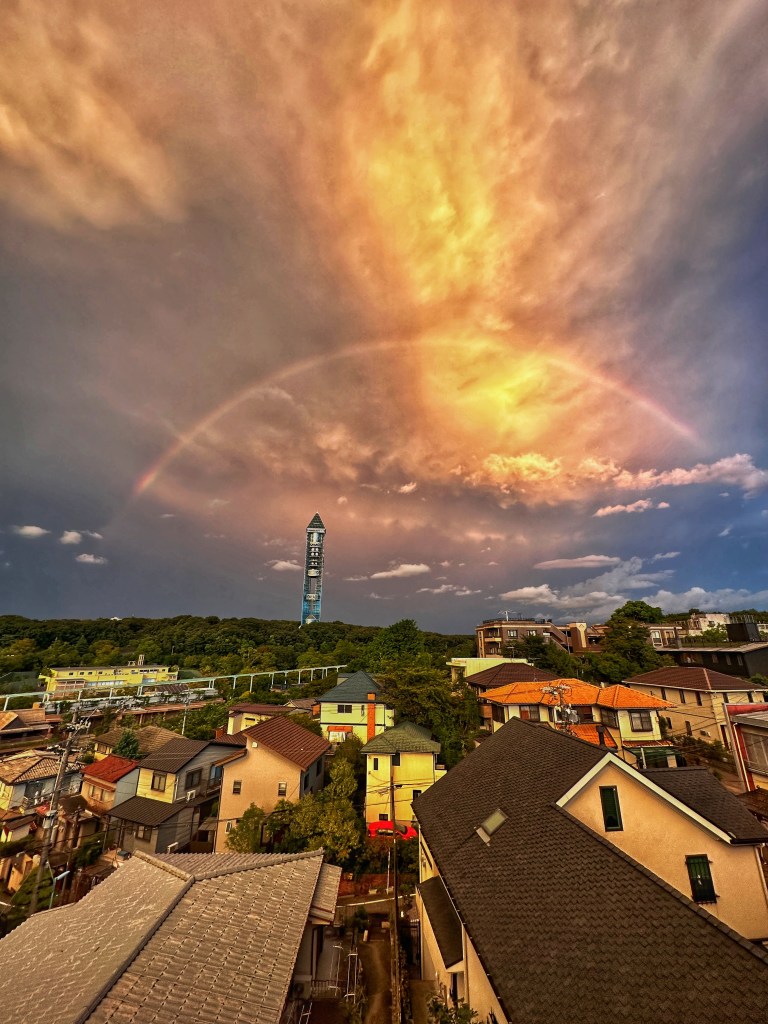
I stay in a sharehouse, over a hill, overlooking the Higashiyama Botanical park and Zoo. I have seen the seasons change through the trees from my balcony. That was the main reason for me choosing to stay in this area, even though, comparatively, it is a longer commute to my school and the city centre.
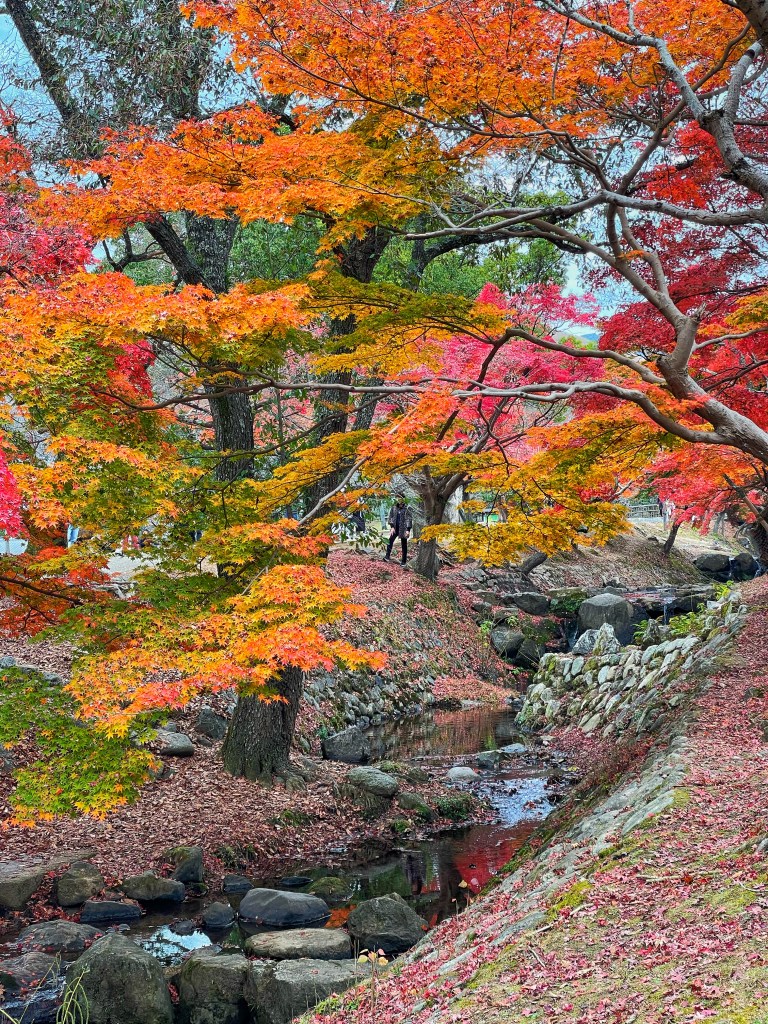
Japanese gardens and parks are breathtaking. They highlight the beauty of nature while leaning on aspects of the traditional Shinto religion, as well as Daoism and Buddhism. One of the core principles of Shintoism, Japan’s native religion, is to respect and appreciate nature. Every garden I have visited, including the botanical garden behind my share house, looks completely different in every season. But the true beauty of these gardens is the people who work hard to maintain them. Japanese people’s love for neatness and everything beautiful has resulted in some of the most beautiful, well-planned seasonal gardens that I have ever seen.
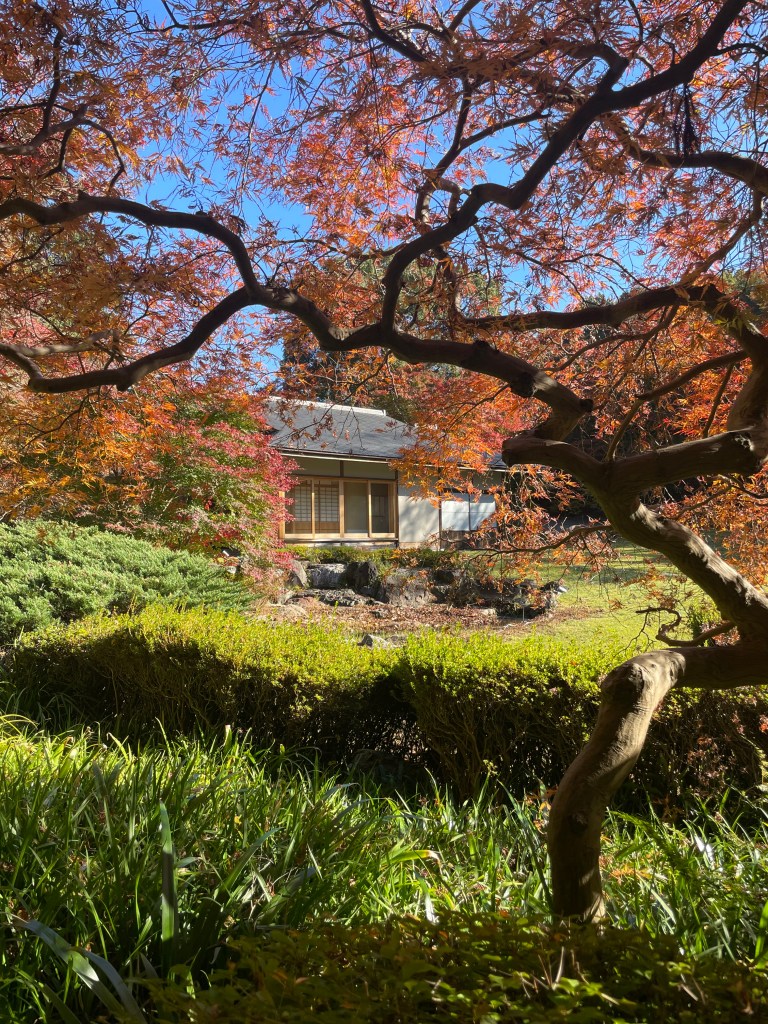
I will end my autumnal reminisce with a Japanese quote 一期一会 (Once in a lifetime encounter) literally translated as ‘one time, one meeting’. Our encounters with people in this life are only temporary, so cherish the moments we share with them. I am doing the same, but with Japanese nature, art, and culture.

 Discover with Saee
Leave a comment